
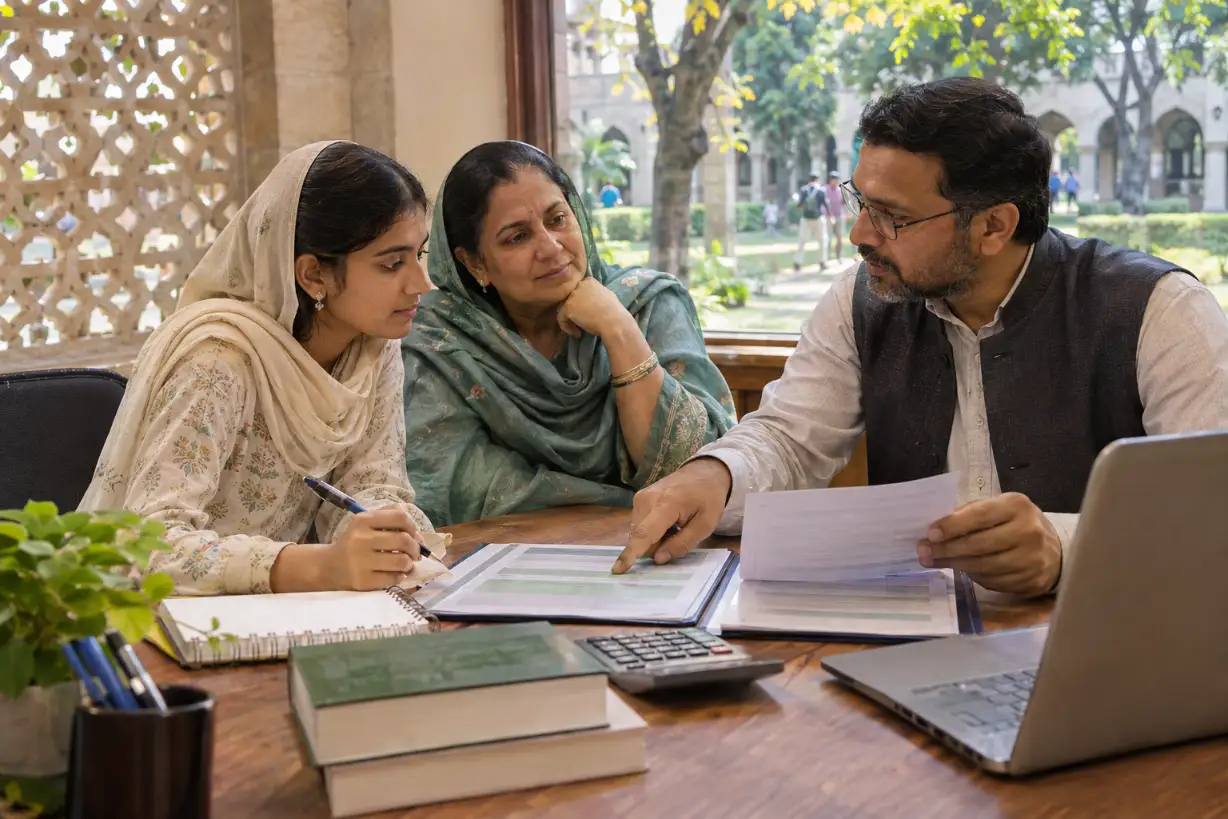
Finance for Muslims in West Bengal today
Islamic finance in West Bengal is best described as a set of ethical expectations rather than a set of licensed products: the state has about 27.01 per cent Muslim population in Census 2011, a very large population of 91,276,115, and no Islamic bank. The financial help that reaches Muslim families arrives mainly through a state minority corporation, scholarships and waqf administration, all of which run on conventional government terms.
Kolkata is the capital and largest city, with 4,496,694 residents in Census 2011 within municipal limits. Howrah, Siliguri, Murshidabad and Malda are other cities and towns in the state. The sheer size of the state means that a single institution cannot serve every district equally, and a household in Murshidabad faces different distances and options from one in Salt Lake.
The first practical point is that Muslims are one of six notified minority communities in India, together with Christians, Sikhs, Buddhists, Parsis and Jains. State schemes in West Bengal are framed around minority status, not around Sharia compliance. A resident who qualifies as a minority member may get a concessional loan without any religious test, and the loan will still be conventional in structure.
The West Bengal Minority Development and Finance Corporation
The main state lender is the West Bengal Minority Development and Finance Corporation, known as WBMDFC. It was set up in 1996 under West Bengal Act XVIII of 1995 and works from Salt Lake in Kolkata, with an office address in Amber Building, Sector-1. Confirm the corporation’s full name and current address before sending any document, since it is usually known by its short form.
Its schemes are the Term Loan and MWEP for individuals, Micro Finance (DLS) and MWEP for groups, the Education Loan, and Pre-Matric and Post-Matric scholarships. Ask the corporation for the current application forms and for the list of schemes open this year.
Like other state channelising agencies, a corporation of this kind normally acts as an agent for the National Minorities Development and Finance Corporation, which gives concessional loans to notified minorities. Ask the corporation to confirm in writing whether its loans are funded through the national body. The important point for readers is that WBMDFC loans carry a stated rate, not a profit margin from a sale or lease.
Loan terms reported for education, business and groups
The district Minority Affairs and Madrasah Education Department of South 24 Parganas has set out the most detailed terms. They apply as that district office states them, so check them with WBMDFC before applying, because rules change and a notice is not a loan contract.
Education loan
A soft loan at 3 per cent a year on a reducing balance is described for higher professional courses. The family income limit is Rs 1.2 lakh in urban areas and Rs 98,000 in rural areas, and applicants should be between 16 and 32 years old. A rate of this kind is still interest, so a student who avoids interest on religious grounds must decide with a scholar whether subsidised minority credit is acceptable.
Term loan and group lending
A term loan at 6 per cent a year is described for small and medium businesses. Conditions include West Bengal domicile, minority status, an existing business, family income up to Rs 3 lakh, age 18 to 50 and a surety. The Direct Lending Scheme, also called micro finance, offers soft loans to women-only self-help groups of 10 to 20 members with at least 60 per cent minority members and an NRLM or NULM identity number.
Aikyashree scholarships and imam honorarium
Not all help is a loan. The Aikyashree scholarships are paid under WBMDFC for students. Pre-Matric support for Classes I to X needs at least 50 per cent marks and a family income up to Rs 2 lakh, and Merit-cum-Means support for professional courses applies up to Rs 2.5 lakh. These are grants, not repayable credit, and for families who avoid interest they relieve pressure on borrowing.
The same district office lists an Imam and Moazzin honorarium for mosques established before 1 January 2012. That date condition means a newer mosque is outside the scheme as described, so committees should check the exact rules locally. Payments to religious staff show how public money and community institutions meet, so ask the district office for the amount and the procedure.
Because the scholarships and honorarium are administered through ordinary government departments, they have no connection to Sharia boards. A parent who wishes to know whether a particular education loan is acceptable must separate two questions: whether it charges interest, which it does, and whether the family’s circumstances allow a scholar to permit it.
Waqf property and the Board of Waqfs
A waqf dedicates an asset permanently so that its income serves a charitable purpose. The state body is the Board of Waqfs, West Bengal. A written answer in the Lok Sabha put the number of encroached waqf properties in the state at 3,082, the highest of any state, which shows how large the stock of waqf land is and how much of it is under dispute.
For a donor or a community trust, that figure matters in two ways. A mosque or school that wants to build on waqf land has to be sure the title is clear, and a family thinking of creating a new waqf should receive legal advice on registration. Ask the board in writing whether it lends at all, and do not assume that waqf funds are available as loans.
Management of waqf land is a governance subject that can attract fraud or neglect. Written accounts and visible audits are the best protection, and complaints about misuse go through the board and the courts. A qualified scholar can advise on whether a planned use falls within the purpose of the endowment.
Microfinance roots: Bandhan Bank and what it is not
Kolkata is also the home of a bank with microfinance origins. Bandhan Bank was born on 23 August 2015, having begun as an NGO and become a non-banking finance company before turning into a universal bank. Anyone who wants the dates of the earlier stages should ask the bank for its published history.
Bandhan Bank is a conventional interest-bearing bank regulated by the Reserve Bank of India. It is mentioned here because readers searching for ethical credit in Bengal will meet its name, and it shows that a microfinance story can end in mainstream banking. It is a conventional bank and does not present any Islamic product.
West Bengal has no licensed Islamic lender, and anyone told about a local interest-free or Shariah-based lender should ask for the registration number, the registrar’s name and recent audited accounts before depositing money.
Crowdfunding and zakat for Bengal communities
Crowdfunding models are donation-based, reward-based, lending-based and equity-based. Donation campaigns suit relief after floods, medical help or a madrasa classroom, and the organiser should be a public charitable trust, a society under the Societies Registration Act, 1860, or a Section 8 company. Donors claim a tax deduction only if the charity has valid 80G approval.
Zakat is 2.5 per cent of qualifying wealth held for one lunar year above the nisab, and Quran 9:60 lists eight categories of recipients. A family can give zakat directly or through an organisation. Funds sent from abroad fall under the Foreign Contribution (Regulation) Act, administered by the Ministry of Home Affairs.
Islamic peer-to-peer lending and equity crowdfunding are not available as regulated products in India, so be wary of any online promise of guaranteed returns, report online fraud through the National Cyber Crime Reporting Portal or helpline 1930, and never treat a campaign target as certain to be reached.
Islamic finance in West Bengal: a checklist for borrowers and givers
Start with documents: Aadhaar, Permanent Account Number, address proof, bank statements, photographs and, for minority schemes, a certificate showing minority status as the scheme requires. Check the income ceiling for the scheme in question, since it varies from Rs 98,000 to Rs 3 lakh across the programmes described.
Compare the stated rate with commercial credit and with schemes such as Pradhan Mantri Mudra Yojana. If a member of a women’s self-help group wants group credit, confirm that at least 60 per cent of members belong to a minority and that the group has an NRLM or NULM number, because those conditions are compulsory under the scheme as the district office states it.
Finally, ask a qualified scholar or Sharia adviser about any financing described as compliant, keep every receipt, and use the RBI Integrated Ombudsman Scheme if a bank or non-banking finance company treats you unfairly. Your credit history with one of the four credit information companies, including TransUnion CIBIL, will follow you.