
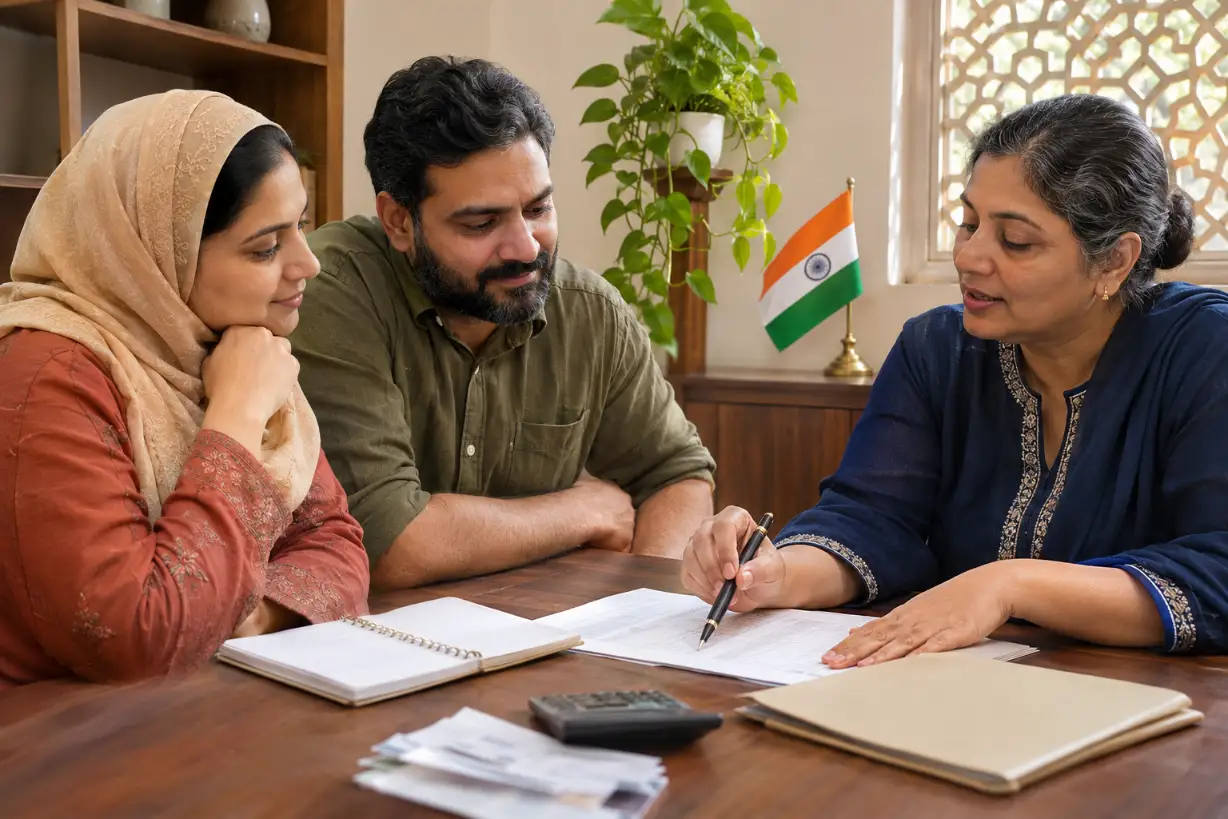
A Souharda society based in Bhatkal
The Eisar Credit Souharda Cooperative is a member-owned credit society at Shifa Cross in Bhatkal, Karnataka, with the postal code 581320. Its full name on its own materials is Eisar Credit Souharda Co-operative Society Ltd, and it is registered under the Karnataka Souharda Sahakari Co-operative Societies Act, 1997. The address tells you where to go for forms and questions, but it does not tell you how far the society’s activities reach.
The society states its purpose as financial inclusion and financial literacy, with a focus on empowering marginalised communities through ethical microfinance. That wording describes an intention, not a measured result, so ask the society for its figures on members, deposits and loans outstanding.
Its founding date and the names of its directors are details to request from the society. If those details matter to you, ask the society for its registration certificate and its latest audited accounts.
Because the society works in Bhatkal, anyone outside the town should ask whether non-residents can join and how repayments are collected at a distance. The answer decides whether the society is practical for you.
The Souharda law behind the society
The Karnataka Souharda Sahakari Act of 1997 lets people form self-help co-operatives that are wholly owned, managed and controlled by their members. Such a society may raise funds through share capital, deposits, debentures and loans, and it receives no financial assistance from the government. The state Registrar of Co-operatives registers these societies, and the Registrar can order a winding up.
A Bill introduced in March 2021 proposed to cap a member’s shareholding at 5% and to require liquidation within two years in certain cases. Ask the state Registrar of Co-operatives which version of the law applies today.
The practical meaning for a depositor is simple. A Souharda society is a co-operative, not a bank. It does not hold a banking licence from the Reserve Bank of India, and India has no licensed Islamic bank. Your protection rests on the co-operative law, on the society’s management and on the registrar’s supervision.
Interest-free deposits from members
Eisar says it accepts member deposits on an interest-free basis. That means a depositor should not expect interest on the balance. Ask the society in writing about the terms of its deposit accounts, including minimum balances, withdrawal conditions and whether any return is shared.
The society also states that its loans recover only the actual cost of operation. In plain words, it says it does not aim to earn a profit margin on lending, and the charge it takes is meant to cover running expenses. You should ask for that charge to be written in rupees or as a percentage before you accept a loan.
Jamaat-e-Islami Hind Karnataka is described as running interest-free Souharda societies in towns including Bhatkal, Udupi, Mangalore and Davangere, with about 18,000 members in total and membership open to non-Muslims. Eisar is not named in that description, so ask the society whether it has any such link and do not assume one.
Loan types and how each works
Four kinds of financing are listed on the society’s loan page, each in a format it describes as Shariah-compliant.
Rahn gold loan
The interest-free gold loan is secured by pledged gold. Rahn means a pledge or collateral securing a debt. The borrower receives money against the gold and gets the gold back on repayment. Ask how the gold is valued, how it is stored and insured, and what happens if repayment is late.
Cost-plus asset loan
In this arrangement the borrower pays 25% upfront and settles the balance in equal monthly instalments. Vehicles are given priority. A cost-plus sale means the seller discloses the cost and adds an agreed mark-up, and the society must own the item before it sells it. Ask to see the invoice cost and the mark-up separately.
Joint group loan and debt financing
A joint group loan lends to a group whose members stand together in repayment. The society also lists debt financing in the forms known as Murabaha, Mudarabah and Ijarah, meaning a cost-plus sale, a capital-and-management partnership and a lease. Request the limits, tenors and charges for these before applying.
Putting the four formats side by side helps with a decision. The gold loan depends on collateral, the asset loan depends on buying a specific item, the group loan depends on the people around you, and the debt financing depends on the contract chosen. A person who needs cash for an emergency will weigh these very differently from a trader who wants to buy stock or a household that needs a vehicle.
Ask the society which of the four fits your purpose, what total amount you will repay under each and whether early repayment is allowed. A figure you have written down protects you better than a verbal promise. Approval is never automatic, and the society decides each application on its own terms.
Eisar Credit Souharda Cooperative: share rules and who can apply
Borrowers must be members and must hold shares in the society. For a secured loan, the required shareholding is at least 2.5% of the loan amount. For an unsecured loan, it is at least 5%. As an example, a secured loan of Rs 1,00,000 would need shares worth Rs 2,500, and an unsecured loan of the same size would need Rs 5,000.
Applications are made on the prescribed form. Ask the society for its list of documents, any age limit and any income test. Lenders in India commonly ask for identity and address proof such as Aadhaar and PAN, a photograph and bank statements, so keep those ready, but treat the list as general practice, not as Eisar’s own checklist.
Shares are ownership, not savings. Ask whether and when shares can be redeemed if you leave, and what happens to them if the society makes a loss.
Contact details and office hours
The loan page gives a telephone number, +91-9141-176359, and an email address for enquiries. Opening hours are stated as Monday to Sunday, from 9:00 AM to 5:30 PM. A seven-day schedule is unusual for a financial office, so confirm the hours by phone before travelling.
When you visit, ask for printed terms for every product you are considering and keep a signed copy. Write down the name of the officer you spoke to and the date. Compare the printed terms with what you were told, and ask for any difference to be corrected before you sign.
Before you pay anything, confirm that the name on the receipt matches the society’s registered name and that the amount is recorded in your passbook or share certificate. Small mismatches in names and dates are the first thing to check when a dispute arises later.
Checking compliance, risk and what to ask
Describing a loan as Shariah-compliant is the society’s claim. Whether a given contract meets the standard is for a qualified scholar or a Sharia adviser to decide. Ask whether a supervisory board reviews the products, who sits on it and how often it meets.
A member-owned society carries risks that a licensed bank does not. Deposits are not covered by an RBI-regulated bank’s arrangements, governance depends on elected management, and a poorly run society can be wound up by the Registrar. Do not place more than you can afford to lose, and do not treat a friendly branch as a guarantee.
If you suspect cheating or an unauthorised deposit scheme, the RBI Sachet portal is the place to report unauthorised deposit-taking, and the National Cyber Crime Reporting Portal and helpline 1930 handle online fraud. Gather your receipts and written terms first.