
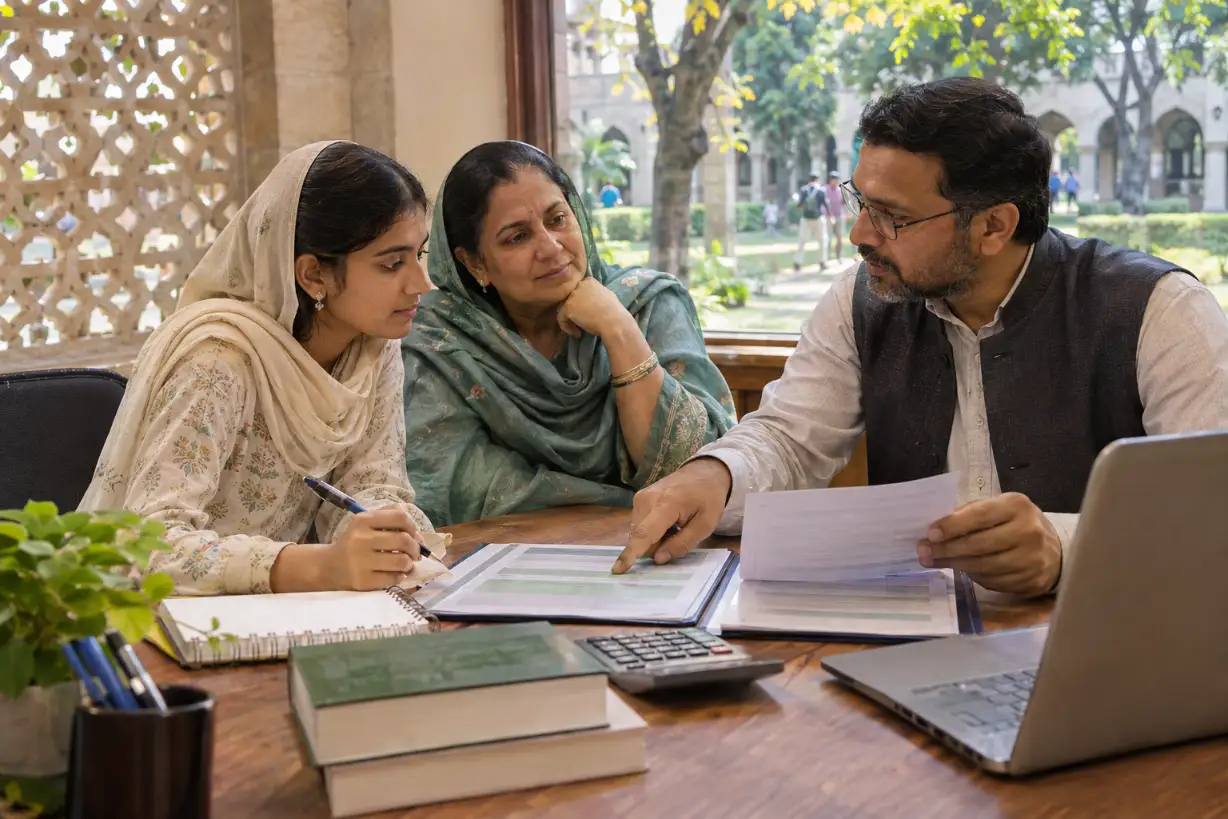
Where young adults fit in interest-free finance
Islamic finance for young adults in India covers the savings, small-loan and fundraising routes that a student, a first-job earner or a young self-employed person can use without interest. No product is built for this age group, and none of the societies and platforms described here runs an age-specific scheme, so a young person uses the same community societies and platforms as everybody else.
That is a useful starting point, because it removes false expectations. India has no licensed Islamic bank, and a young adult will not find a youth account, a starter financing line or a graduate scheme labelled halal at a national lender.
What does exist is smaller. Co-operative credit societies take small regular savings and lend to groups, zakat platforms pay for education for those who qualify, and public schemes, which charge interest, are open to anyone who meets their conditions. A young adult can combine these thoughtfully, with the guidance of a scholar for the religious questions.
Savings first: the Janseva model for small earners
Janseva Cooperative Credit Society describes a microfinance route that starts with a small daily habit. Members save 5 rupees a day, which comes to 125 rupees a month, split into 100 rupees of savings and 25 rupees as a membership fee. For a student with pocket money or a trainee on a modest stipend, that amount is within reach.
After one year of savings, a self-help group can receive an interest-free loan of twice the amount saved. The loan rests on joint liability, so members vouch for each other, and no collateral is taken. A 1 per cent processing fee and a 4 per cent group contribution apply.
A group of friends or colleagues who trust each other can use this structure to fund a small enterprise, a course fee or equipment. The risk is that one member’s missed payment affects everyone, so group members should know each other’s circumstances well.
Business loans after two years
The society also describes an interest-free business loan after two years in which profits are divided 70 per cent to members and 30 per cent to Janseva. This is a profit-sharing arrangement, not a plain loan, and a scholar can say whether the split suits the contract described. Savings habits built early make this step possible later.
Zakat-funded education and what it excludes
For a young person from a family with limited means, zakat crowdfunding can fund study. IndiaZakat lists education and scholarships among its causes, and its Mission 10000 Students programme offers yearly sponsorship of between 10,000 and 15,000 rupees. It is not a loan and nothing is repaid.
The conditions are strict. The platform’s approval process says education funding covers only school or college fees, not hostel, bus or food costs, and that a letter from the local masjid imam confirming zakat eligibility is needed, along with checks on the beneficiary’s identity. Personal bank accounts are not allowed except for Nikah causes.
The approval process is written for those who approve causes, so it does not explain how a young person raises a campaign. For that, read the platform’s own policies. Documents usually include an identity proof, an income certificate and fee receipts, and false information can lead to blacklisting.
Zakat is for people who qualify under the eight categories named in the Quran, such as the poor and the needy. A young earner with an adequate income and savings is probably not an eligible recipient, so ask a scholar before applying.
Public routes for study and first businesses
The PM-Vidyalaxmi portal brings education loans in India and abroad onto one site. The scheme was approved by the Union Cabinet on 6 November 2024 and promises loans without collateral or guarantor, a 75 per cent credit guarantee on loans up to Rs 7.5 lakh, and a 3 per cent interest subvention on loans up to Rs 10 lakh for families with income up to Rs 8 lakh. Full subvention applies where family income is up to Rs 4.5 lakh. It is meant for students admitted to NIRF-ranked institutions.
These loans carry interest, so they do not meet the Islamic objection to riba, and a Muslim student has to decide with a scholar whether the subsidy changes anything in the family’s view. The information is offered so that the choice is informed.
For a first business, the Pradhan Mantri Mudra Yojana gives loans up to Rs 10 lakh to non-farm micro and small enterprises in three bands: Shishu, Kishore and Tarun. Stand-Up India, a scheme for women and SC/ST entrepreneurs, lends Rs 10 lakh to Rs 1 crore for new enterprises to applicants aged 18 and above. Ask a bank branch whether the scheme is still open after the 2025 financial year.
Startup India offers recognition to new ventures through the DPIIT, and its portal reports more than 60,000 startups. Recognition gives access to tax exemption and faster patent processing. None of these programmes is Islamic, and none can promise approval.
Crowdfunding for a young person’s project
Platforms such as Ketto and Milaap host Indian fundraisers for medical, education and personal needs, and Milaap lists a 0 per cent platform fee with setup in under ten minutes. LaunchGood, a global Muslim platform, states 0 per cent platform fees and vetted fundraisers; a reader in India should ask it whether Indian campaigns are accepted.
All of these are donation models. Supporters give without expecting a return, so a young entrepreneur cannot use them as a source of investment or a loan. A campaign works best for a clear, one-time need, such as a course fee or a piece of equipment, explained honestly with documents.
Interest-free lending between individuals is a separate matter. The Reserve Bank of India regulates peer-to-peer platforms as non-banking finance companies and sets limits on exposure. Platforms in that category lend with the option of a return, so they are not a halal route by default.
No fundraising result can be promised. A campaign may raise little, and a young person should plan a fall-back.
Building a clean credit record early
A credit score in India runs from 300 to 900 and is issued by credit bureaus, including TransUnion CIBIL, Experian, Equifax and CRIF High Mark. Higher is better. An RBI notification from 2016 gave individuals the right to one free full credit report each calendar year from 1 January 2017, after authentication.
A young adult with no loan history has no score at first. Paying every instalment on time, to a society or any other lender, and avoiding unnecessary applications is a sound way to build one, even if a small interest-free society does not report to the bureaus. Whether a particular society reports is something to ask.
Check the report once a year and dispute errors. Lenders and bureaus must resolve a credit-information complaint within 30 days under RBI directions. When you file a complaint, ask the bureau in writing for the exact deadline that applies.
Islamic finance for young adults in India: a practical order of steps
Begin with a budget and an emergency fund, before any borrowing. Set aside a fixed amount every month, even a small one, in a place where it earns no interest, or in an arrangement that a scholar has approved.
Next, work out your zakat position when your savings grow. Zakat is 2.5 per cent on qualifying wealth held for one lunar year above the nisab threshold, and a scholar can help with the calculation.
Then choose the right tool for the need. A course fee may suit a zakat education grant if you qualify, a shared enterprise may suit a group loan with friends, and a bigger business plan may call for a profit-sharing partner and a clear written contract. Keep the numbers modest and the papers in order.
- Save a fixed amount each month before spending
- Join a trusted society or group only after reading its rules
- Keep all identity and income papers current
- Ask a scholar to review any contract before signing
- Check your free credit report once a year